On Tina Fey as Shill

liz lemon

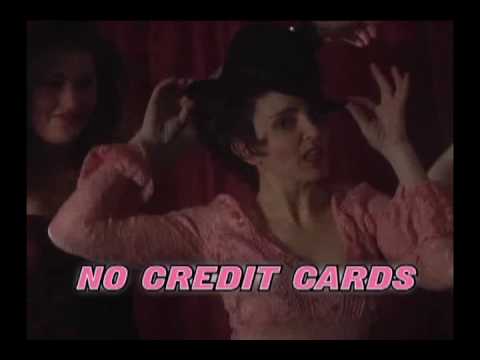
Tina Fey is suddenly everywhere and she really wants you to buy stuff. Here she is as a lovably harried, not-quite-together but freely spending American Express user. Here she is tossing her improbably lustrous hair and being unironically effusive about the restorative properties of avocado and shea oil. Here she is on the cover of Elle looking molto elegante, her hot negligee-clad bod peeking out from a Max Mara coat, her acne scars carefully ’shopped out.

We no longer think of advertising as the first refuge of the hungry actor and the last refuge of the celebrity burnout. People used to make fun of Orson Welles debasing his artistic legacy for Paul Mason, but nowadays it makes perfect sense for Ben Kingsley to be the new Jaguar king or Martin Scorsese to flash his AmEx for the camera. It’s no secret that Tina Fey is a winner, but it’s one of her great triumphs that, as Liz Lemon on 30 Rock, she made us believe she wasn’t, complete with flashbacks to the character’s nerdy, dorm-bound, frizzy haired, D&D-playing origins. But now Liz Lemon has been put to bed, and Tina Fey seems quite at home in the winners’ circle and wants you to be aware of how great her hair is.

But winning isn’t that good for comedy, and now that we’re being made so acutely aware of what a winner Tina Fey is, I wonder how she plans to proceed. Something tells me her drive to make groundbreaking comedy is on the wane. She seems too comfortable in this new role of the ex-sitcom star who picks up a fat paycheck for a half-day commercial shoot, who gets to act with Paul Rudd in the occasional lukewarm rom-com, who puts on an evening gown and trades harmlessly celeb-skewering jokes with Amy Poehler at the Golden Globes.

And that’s fine, I guess. But I can’t help feeling a little let down by the feminist-as-consumer overtones of her new ventures, and by the fact that this very smart woman has decided to put her considerable powers to use selling hair dye. As a friend of mine put it, “How big does the sun-occluding pile have to be?” Celebrity endorsements and disposable movie roles are now just really efficient ways of keeping the pile growing, with no need to be burdened by any sense of personal compromise — not at all the way (for instance) Orson Welles used to accept silly, slumming roles just so he could finish shooting the Shakespeare adaptations no one else wanted to pay for, and then got shit-faced just to get through the humiliation of a commercial shoot. But Orson Welles was the has-been who ruined himself. Tina Fey is the quintessential having-it-all modern woman. Orson Welles’ drunken outtakes are an embarrassment. Tina Fey’s blooper reels are talk-show-worthy. Orson Welles carried his 350 lbs with laughable self-importance. Tina Fey moves through the checkout aisle with likable self-deprecation. There is no conflict anymore. There’s too much money to be made.
On ‘Pretty in Pink’

The fatal error of Pretty in Pink isn’t, as some people insist, that Andie (Molly Ringwald) ends up with the bland Blaine (Andrew McCarthy) instead of the dynamic Duckie (Jon Cryer). A lot of hay was made about the fact that the original, pro-Duckie ending was ditched for one that market-tested more favorably, and for a minute in the ’80s, the movie exemplified the sacrifice of good cinematic storytelling to the lowest common denominator.

But the truth is, both Duckie and Blaine are all wrong for Andie, and this is a casting problem, and by the time the filmmakers realized there was a casting problem it was probably too late. (John Hughes wrote the movie and Howard Deutsch directed it.) The choice between McCarthy’s mouse-faced boringness and Cryer’s kid-brother neediness was pretty much unnavigable. McCarthy may have failed to produce any sparks with Ringwald, but the chemistry Cryer generated was deadly for being so fraternal; focus groups probably responded to the original ending the way you or I might respond to Marsha giving Peter the eye.

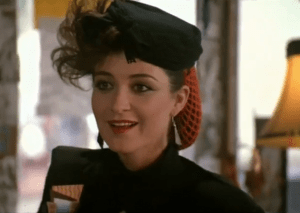
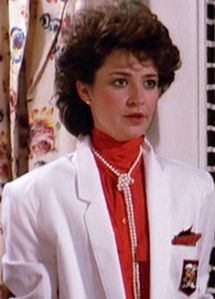
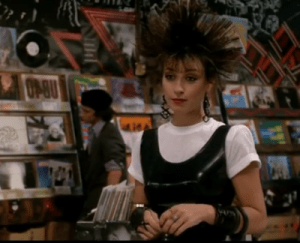
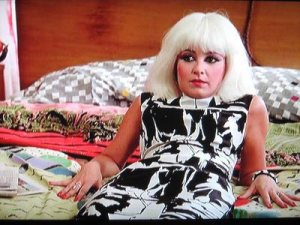
The real flaw — the tragic flaw — of this movie is John Hughes’s mistreatment of Andie’s older coworker Iona (Annie Potts), one of the most magnetic, lovable, and fun-to-look-at characters of any romantic comedy. She looks like this.

potts1

And this.

potts6

And this.

potts5

And this.

potts4

Right? Dazzling. But if we’re to believe this movie, she spends night after night alone, flopped out on her half-collapsed bed listening to old records and mooning over her glory days. Because evidently there are zero men in the entire Chicago metropolitan area who might be interested in a thirty-something woman who’s beautiful, fun, effervescent, and a genius of self-invention. It’s the self-invention part that’s the problem. The whole self-invention thing has to go — it’s messing up Iona’s chances of finding a husband! And in Hughes’ world, being unmarried, childless, of modest means, and nearing middle age is just about the worst fate imaginable. So he decides it’s time for Iona to get normal. He presents her with a Flock of Seagulls haircut, a yuppie wardrobe, and — ta-DA! — a boyfriend. A divorced doctor with kids.

Maybe you don’t remember how bad this is.

I hesitate to show it to you…

I can’t even…

Well, here it is.

potts7

I was 14 when this movie came out, and I remember thinking: No. And: Why?

But Iona’s boldly suburban new style wins Andie’s unqualified praise, to which Iona self-deprecates, “Aw, I look like a mother.” Andie replies, “Well, a little. But that’s OK.”

See, but it’s not OK. Leaving aside the obvious horribleness of this look — whatever, it was the ’80s, we all went astray — it seems clear there’s no going back for Iona. She’s accepted this mainstreaming and filing-down of her persona as the cost of finding love. John Hughes has turned her into a high-functioning Stepford wife and we’re supposed to be happy about it.

Hughes had kind of a thing for overhauling his ladies, and Iona is reminiscent of his previous makeover victim, The Breakfast Club‘s Allison (Ally Sheedy), an artistic social misfit who wipes away her (entirely appropriate) goth eyeliner, tames her Chrissie Hynde hair under a nice, neat headband, and submits herself to the approving gaze of the Jock. The Jock! Who has precisely nothing in common with her. But oddball chicks need a stabilizing masculine influence, you see, someone like a doctor or a high school football star who can confer a bit of civilizing status and bring them into the fold.

Hughes’ conservatism has been chewed over and over and over; less discussed is this paternalistic streak of his, which extended even to characters in their goddamn thirties. He created genuinely interesting female characters and then couldn’t stop himself from overcorrecting them. Like a dad, he couldn’t let them pursue a path he thought unwholesome, couldn’t brook their autonomy, couldn’t permit them to explore another side of themselves with a social inferior (see Claire and John Bender in The Breakfast Club).

Like a dad, he just wanted us, the girl viewers coming of age in the ’80s, to turn out normal. He just wanted to protect us. And like a dad, he disappointed us all the more for how much we needed him.

On Hating the Eagles

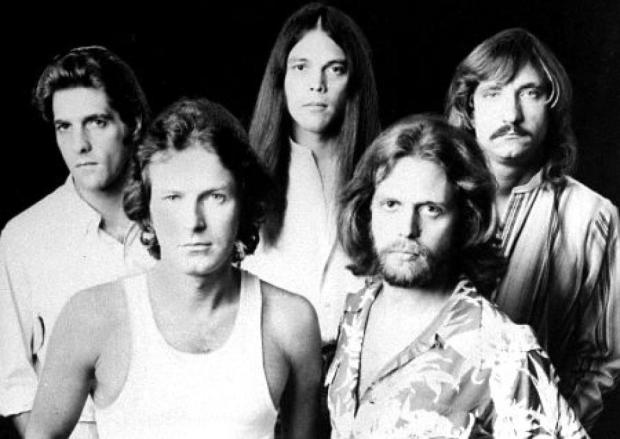
alg-eagles-jpgMost people I know who are of a certain age and care about music in a certain way hate the Eagles. By ‘a certain way’ I mean (or I think I mean) that they’re much more likely to appreciate attitude, originality, and raw talent than technical skill or palatability. So they might say, for instance, that the Sonics were geniuses but the Doors were hacks. They might say Johnny Thunders ‘invented’ punk but Led Zeppelin ‘destroyed’ rock. They might think Sparks underrated and Rush overrated.
On the other hand, these people — let’s just go ahead and call them cool people — might support the revivalism of a previously overexposed-yet-widely-loathed act (e.g., the Bee Gees), or they might be an outright apologist for a piece of fluff like Neil Sedaka. But no one is defending the Eagles.

It is a fact that the Eagles have far surpassed Billy Joel in universal revulsion by cool people. I personally know at least two cool people who freely admit loving Billy Joel, and zero cool people who openly enjoy the Eagles. Quite a few Facebook friends of mine approvingly shared a news item about a woman who stabbed her roommate because he refused to stop playing the Eagles. (Typical comment: ‘Is that a crime???’)

And I get it — you cannot fucking get away from the Eagles. They’re everywhere. They’re on the front lines of rock’s corporate-backed invasion into the most banal spaces of our lives — supermarkets, family restaurants, your bank’s on-hold line. If you fall within a particular age range (and that range is probably broader than I think), you can never really ‘hear’ an Eagles song ever again. There is pretty much no way to evaluate an Eagles song.

So why do so many people insist they’re terrible? If the Eagles are terrible on their musical merits, I can’t figure out what makes them substantially different from the non-hated Byrds. If the Eagles are terrible because Don Henley and Glenn Frey are egomaniacal assholes (which seems to be the consensus), then it should be OK to hate Charlie Parker for such fairly repellent acts as stealing from his friends to buy heroin or getting a blowjob while eating chicken in the back of a taxi (according to the memoirs of Miles Davis, who was a wife beater).

(Yes, I know Don Henley is no Charlie Parker and Glenn Frey no Miles Davis. But you get the idea.)

Defending the Eagles, if that’s what I’m doing, is a really dumb task because they’re super-successful and it’s generally stupid and a waste of time to defend super-successful people. I don’t want to defend them so much as suggest that maybe it’s dishonest to hate a band we’re incapable of judging. Is ‘Hotel California’ a terrible song? I’m not sure. I only know I never want to hear it again. But let’s say, hypothetically, the Eagles never existed. And let’s say the marginal band Poco had an unreleased demo, and someone stole that demo from Richie Furay’s basement, and bootlegs of that demo got around, and that demo was ‘Hotel California.’ Would we like it? Again, I’m not sure. I think at least a few of the people who hate the Eagles might kind of like it. I think some of them might even share it on Facebook.

But who knows. We only have our experiences (and the sensibilities built on them), and it is bullshit that ‘there’s no accounting for taste’ because there absolutely is. I remember hearing ‘Hotel California’ as a 5- or 6-year-old, when it was first getting fuckloads of airplay, and being just fascinated. And even though I pictured the lyrics pretty literally — the beast at the banquet (in my mind’s eye it was a kind of fanged bull), the steely knives, etc. — I think I also had my first inkling of what a metaphor was.

My family was living in a Southern California suburb, it was the ‘70s (duh), and it seemed to be capturing something about that time and place…. the weather, certainly, and how it felt to ride in a car at night with the windows rolled down, and the soft-focus beauty that some women had. But besides that, I remember at that age finding a lot of things, a lot of people, profoundly creepy. I still feel that way about the ‘70s, but in a way that now kind of enthralls me and makes me want to seek out every artifact, every album, every Robert Altman movie: it was such a gloriously creepy decade! And though ‘Hotel California’ is definitely the worse for wear and no longer has much of an effect on me except mild irritation, at the time it kind of embodied that special creepiness for me. Which is why I can’t 100% get on board the Eagles hate train — for a minute there, they made a mark.

But maybe that was just my shitty 6-year-old taste.

On ‘Purple Rain’

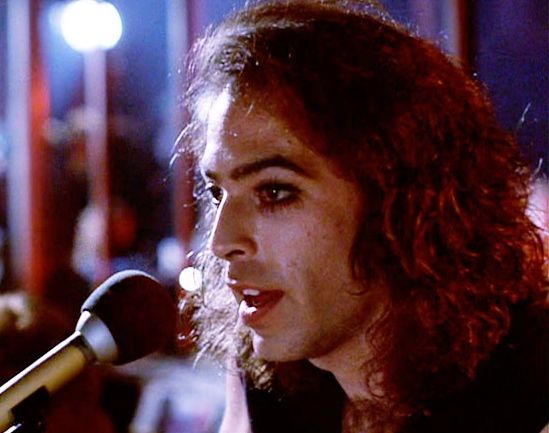
PurpleRain_114PyxurzOn the eve of Prince’s July 4th Essence Fest show (which I didn’t have tickets for), I rewatched Purple Rain with some friends and was thunderstruck anew by the sexy, magnetic, eyeliner-wearing star of the movie.
I’m referring to Joseph A. Ferraro, the guy who plays the MC of First Avenue. In a movie stuffed with wooden acting, Joseph A. Ferraro is the only actor whose woodenness is absolutely electric. I can say with confidence that I’ve never heard anyone say seven consecutive words the way he says, ‘Ladies and gentlemen… please welcome… The Time.’ He says maybe 14 more words the rest of the movie, all of them spellbinding.

Yet I can’t find any information about Joseph A. Ferraro at all. His IMDB listing (which also has him as Joseph E. Ferraro) tells me nothing. Based on the first two Google pages I searched through, nobody else in the world seems to be much interested in him, except for one absurdly reductive human on a Prince message board who refers to him as a ‘vampire.’

Joseph A. Ferraro seems to speak with a slight accent but says so little I can’t place it (his name suggests Italian or Spanish descent, but his lack of affect reads more German or maybe Hungarian). He is not into heating up the crowd, nor does he seem bored. He has the faintest glimmer of a smile when he introduces the bands, and that smile might be a tiny bit sinister.

In a parallel universe he could’ve been a great Bond villain. In a parallel universe, he could’ve been a major motion picture star. In a parallel universe, he could’ve been my MC boyfriend and said hardly anything, and I would’ve been OK with that for a week or two but eventually demanded that we have a conversation, thus ruining everything.

But back to that second parallel universe. Why didn’t he become a star? Part of me is glad he didn’t, in the same way a movie idolater might be ‘glad’ James Dean died young so he couldn’t go on to destroy his own magic by getting old and self-parodic, the way Robert De Niro did, or Al Pacino, or Marlon Brando. Joseph A. Ferraro made his impression in 21 words and split — and in doing so will always represent for me the infinite potential of cool.

On ‘Magnificent Obsession’

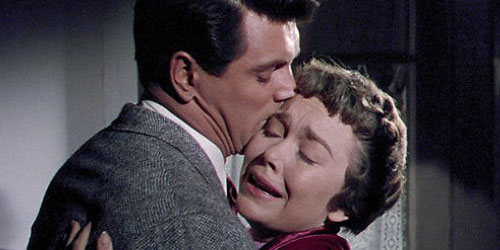
magnificent

‘And now, to think Bob Merrick is alive because of Dad’s resuscitator.’
Magnificent Obsession, 1954

That was the line. From then on, utterances of ‘the resuscitator’ became increasingly hilarious (and contagious), and if we’d known that when I hit Play Movie, we could’ve made an efficient little drinking game out of it. Eric became an ad-libbing machine, sending his mom and me into fits of laughter to the point that we may have missed a few instances of ‘the resuscitator.’

It doesn’t really matter how the resuscitator serves the plot. It was a super-soaper MacGuffin, and if you haven’t seen the movie, maybe the less said about its context the better (except that it’s freaking hysterical). A third of the way in, the resuscitator recedes, but the plot absurdities keep piling on (which I won’t spoil, much) and there are countless little treasures of subtext, style, and detail that make it the standard-bearer (as far as I’m concerned) of good/bad ’50s melodrama.

There’s the kooky pop philosophy behind Rock Hudson’s overnight conversion from rich asshole to aspiring surgeon/savior, a creed that combines the hokey altruism of Pay It Forward with the wackadoo determinism of The Secret, except that the catchphrase that comes with it — ‘I’ve used it all up’ — makes no sense whatsoever.

There’s the scenes where Jane Wyman, recently blinded in an accident, flies all the way to Zurich to be examined by a team of surgeons, whose world-renowned diagnostic technique consists of shining a penlight in her eyes and inquiring about dizziness.

There’s the awkward cutaways to poor Agnes Moorehead, whose Emotions-Color-Wheel face lets us know it’s sad that Jane Wyman’s husband dropped dead of a heart attack or worrisome that Wyman’s medical condition is uncertain.

There’s the parade of doctors and patients lighting cigarettes, fun in the admittedly cheap enlightened-hindsight way that it’s fun to watch Mad Men.

There’s the fuck-it transition where Rock Hudson talks about enrolling in med school one moment and the next — literally within a single dissolve — is hailed as a brilliantly promising brain surgeon in a newspaper clipping.

The list goes on. (It really does.)

But I thought the two stars were great. My mother-in-law Diane didn’t think much of Jane Wyman as Rock Hudson’s love interest, and I admit they seem like a pretty odd pairing at first. But I tell you what: Hudson really made me believe he was madly in love with the older, kinda schoolmarmish, confusingly coiffed Wyman — his real-life sexuality never got in the way of him seeming genuinely hot for his female leads, from what I’ve seen — and in her understated, dignified way she clearly wants to bag his bones, as any red-blooded American repressed lady would. Personally, I admired Wyman’s ladylike poise and kindness of spirit, and there’s something really serene about her face and carriage, even if she‘s criminally underserved by her stylist. Anyway, however mismatched they may seem now, they apparently lit the screen on fire in 1954 because Douglas Sirk paired them again the following year in All That Heaven Allows (a better movie in most ways but not as much fun).

Other good things. The super-saturated cinematography (a Sirk hallmark) is gorgeous to look at, even though too much of it is wasted on boring hospital rooms, offices, and corridors. The score is appropriately soupy but incorporates some legit themes from Beethoven and Chopin, a great combination of middlebrow and highbrow (exactly what I wanted). And it clocks in at a perfect 108 minutes. It was a thoroughly satisfying movie-watching experience. Go rent it with someone you love!